
Selecting an experienced screen media manufacturer provides mining operations with technical expertise that improves throughput by 15% to 20% through optimized aperture geometry and material metallurgy. Professional suppliers maintain an aperture tolerance of ±0.05mm, which prevents the 5% to 10% product contamination rates common in budget-tier replacements. Field data from 2025 shows that engineering-led site audits utilize vibration analysis to reduce recirculating loads in crushing circuits by 12%. Utilizing premium 90-Shore A polyurethane extends the wear life to over 4,500 hours, significantly lowering the cost-per-ton and preventing the premature fatigue failures that cause 60% of unscheduled maintenance events.
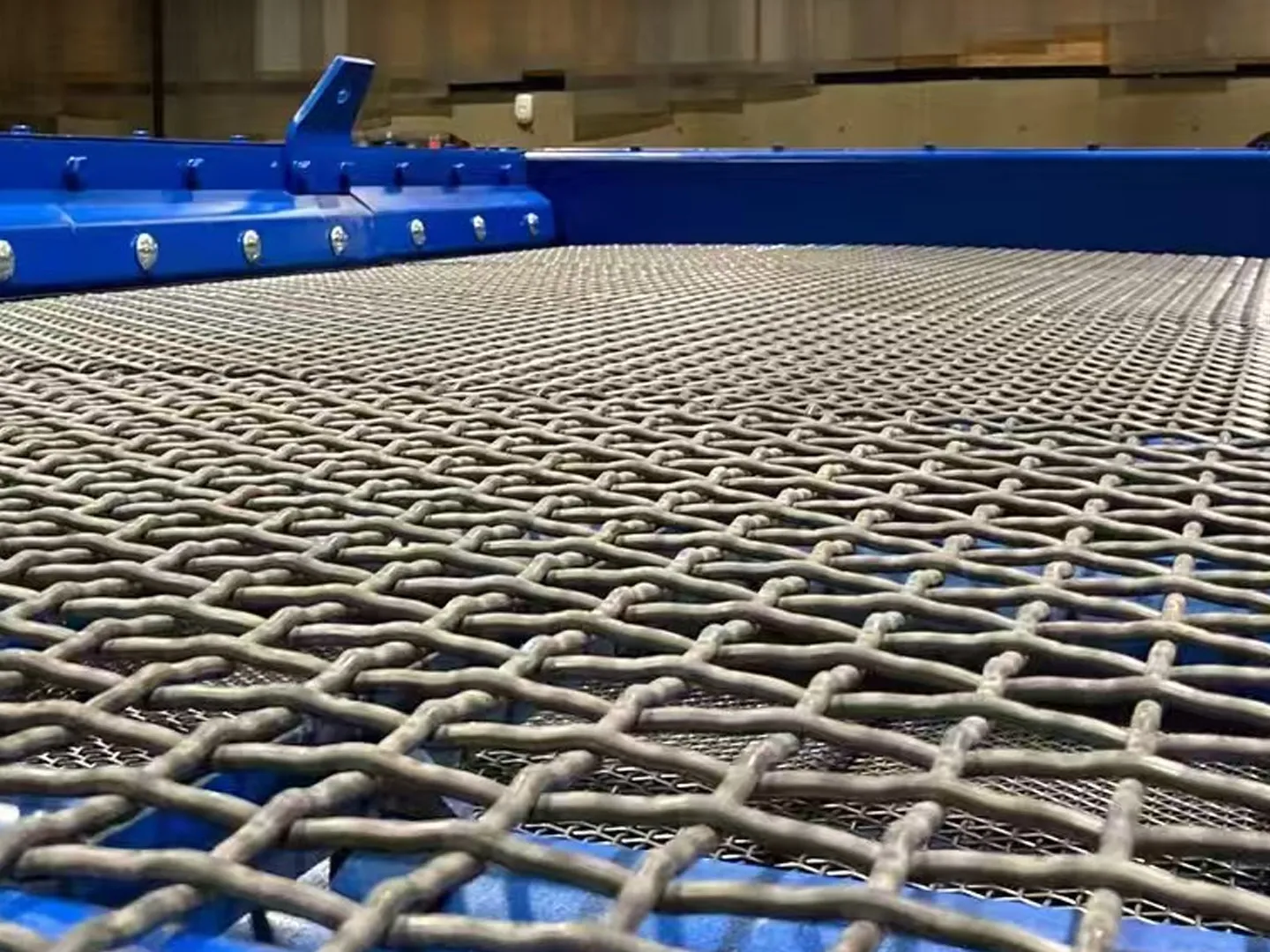
Reliability in a high-volume processing plant begins with the raw material specifications and metallurgical standards enforced by the supplier. High-carbon steel wire must maintain a consistent tensile strength of 85,000 PSI to resist the mechanical fatigue caused by constant 6.0g acceleration.
If the wire quality fluctuates by even 5% in carbon content, the mesh will stretch unevenly under load, creating sagging pockets that trap moisture and fines. This structural failure leads to uneven wear across the deck, forcing the vibration energy to dissipate as heat rather than material stratification.
"A 2024 industrial benchmark study of 120 quarry sites found that inconsistent wire tension accounted for a 12% drop in screening efficiency over a six-month operating window."
Once the material quality is verified, the precision of the weaving or molding process determines the final aperture integrity. Automated looms ensure every wire intersection is locked in place, preventing aperture migration where holes grow larger under the weight of the ore.
For synthetic media, the focus moves to the chemical bonding of the polyurethane, which must resist the hydrolysis found in wet screening environments. Manufacturers using multi-stage curing cycles produce panels that survive 5,000 hours of slurry impact, whereas single-stage pours often delaminate within 1,500 hours.
| Manufacturer Tier | Quality Control Metric | Service Life (Avg Hours) | Technical Support Level |
| Tier 1 (Global) | Batch-Specific Lab Reports | 4,000 - 6,000 | 3D On-Site Audits |
| Tier 2 (Regional) | General Spec Sheets | 2,000 - 3,500 | Phone Consultation |
| Tier 3 (Budget) | Visual Inspection Only | 500 - 1,500 | Sales Support Only |
The documentation provided in lab reports allows maintenance teams to predict exactly when a panel will reach its 75% wear limit. This predictive approach eliminates the need for emergency shutdowns, which can cost high-volume gold or copper mines upwards of $8,000 per hour in lost revenue.
Beyond the physical product, the engineering support offered by an experienced supplier plays a role in optimizing the deck configuration for different ore types. A supplier that uses vibration analysis tools can identify "dead zones" on the screen where material is not moving effectively.
"Field trials in 2025 showed that re-configuring the stroke angle based on manufacturer 3D simulations increased fines recovery by 18% in limestone processing."
These optimizations depend on the manufacturer's ability to provide custom attachment systems, such as specialized hook strips or pin-and-sleeve fasteners. A perfect fit prevents panel slapping, a condition where the media vibrates against the support bars, causing premature fatigue cracks in the steel frame.
The logistical capability of the supplier also dictates long-term performance, as waiting for replacement parts causes extended downtime. Manufacturers with localized distribution hubs can maintain a 98% "on-time" delivery rate for standard 1ft x 1ft or 1ft x 4ft modular panels.
Using a single supplier for an entire circuit allows for better data tracking and performance benchmarking across different machines. When every deck uses the same Shore hardness and aperture geometry, engineers can isolate mechanical issues from media failures with 90% accuracy.
"Internal benchmarks from a 2026 industrial survey indicate that consolidating media suppliers reduced administrative overhead and parts inventory costs by 15% annually."
Traceability is another factor, with premium manufacturers laser-etching batch numbers and production dates onto every individual panel. This allows for a "cradle-to-grave" analysis of the media, identifying if a specific batch suffered from early wear due to material defects or operational abuse.
Advanced suppliers now offer digital wear-monitoring services using RFID tags embedded within the polyurethane ribs. These sensors transmit real-time data to the control room, alerting operators when the remaining thickness of the panel reaches a critical 3mm threshold.
The transparency of a manufacturer’s QC laboratory is the final indicator of their commitment to performance. Access to rebound resilience data and tensile pull tests ensures that the media will behave predictably under the 3,000 RPM frequencies used in dewatering applications.
Investing in R&D allows these manufacturers to develop new polymer blends that resist the blinding effects of high-clay ores. Specialized "non-stick" coatings applied during the molding process can increase the drainage rate of sticky slurry by 25% compared to standard materials.
Final selection should prioritize companies that provide a documented ROI analysis based on cost-per-ton rather than the lowest price per panel. A panel that costs 20% more but lasts 3 times longer provides a significantly better financial outcome for the processing facility.
Ongoing collaboration between the plant engineer and the manufacturer ensures that the screen media evolves as the ore body changes. As mines go deeper and the rock becomes harder, the media must be adjusted to handle the increased abrasiveness without sacrificing throughput or recovery.