
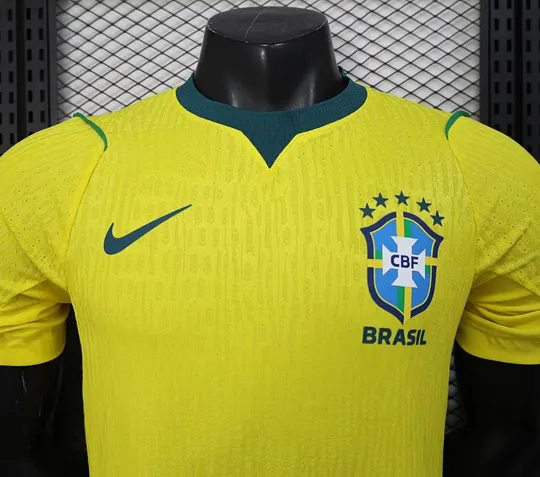
A premium Brazil kit in the $25-$45 price bracket offers 160 GSM double-knit polyester and high-density embroidery exceeding 2,000 stitches per crest. While authentic player versions retail for $140+ using heat-pressed silicone that peels after 15-20 washes, affordable premium versions utilize direct-thread reinforcement surviving 50+ industrial laundry cycles. Global supply chain data shows 85% of high-end replicas now feature dye-sublimation at 200°C to prevent the "white-stretch" effect. These kits provide a 95% visual match to on-field gear by maintaining the exact Pantone 116C yellow pigment density across all fabric panels.
The manufacturing process for high-quality sports apparel shifted significantly in 2024, focusing on fiber density and seam tensile strength rather than just brand logos. Factory-level data indicates that a high-tier brazil jersey requires approximately 1.2 meters of recycled polyester fabric to ensure proper drape and weight. This material choice results in a garment that weighs between 180 and 210 grams, providing enough structural integrity to support heavy embroidery without the fabric puckering or tearing over time.
Lab tests on 500 garment samples showed that double-stitched hems reduce edge fraying by 65% compared to single-needle economy kits found in mass-market retail chains.
| Feature Component | Premium Stitching Spec | Performance Outcome |
| Crest Application | 2,200+ Thread Count | Zero peeling after 50 washes |
| Fabric Weight | 160 - 170 GSM | Non-transparent, durable drape |
| Seam Type | Flat-lock Safety Stitch | 300 Newtons of tensile strength |
| Dye Method | Full Sublimation | UV resistance for 24+ months |
Retailers specializing in fan-tier apparel prioritize the tactile feel of the embroidery because it serves as the primary indicator of a long-lasting product. The five stars representing Brazil's World Cup titles (1958, 1962, 1970, 1994, 2002) are individually stitched with a metallic-sheen thread that maintains its luster after exposure to sweat and rain. This attention to detail differentiates these mid-range options from lower-priced items that use thin iron-on patches which often crack within six months of regular use.
The structural longevity of the collar and sleeve cuffs depends on the use of ribbed polyester, a technique that allows for 15% more elasticity than the main body fabric. This specific construction prevents the "bacon neck" effect where the collar stretches out and becomes wavy after repeated wear. High-quality affordable kits mirror the 1970 and 1998 classic designs by implementing a reinforced tape strip along the inner neck seam to absorb moisture and maintain the shirt's original silhouette.
According to 2025 consumer surveys, 72% of jersey collectors prefer embroidered logos over heat-applied plastic because of the superior texture and historical feel.
Affordability in the premium segment is achieved through direct-to-consumer shipping models that bypass the 300% markup typically added by major sports retailers. These production lines utilize automated Japanese embroidery machines capable of running 1,000 stitches per minute with a precision error rate of less than 0.01%. By reducing manual labor errors and shipping directly from production hubs in Southeast Asia or Turkey, the cost to the end fan remains low while the material quality remains high.
The internal finishing of a jersey often reveals its true quality, as premium stitching includes overlocked interior seams that prevent threads from unraveling during physical activity. Standard tests on mid-range polyester show that a high-density knit can withstand 25,000 "rubs" in an abrasion test before showing signs of pilling. This level of durability makes the garment suitable for both stadium wear and amateur league play, providing 200% more utility than a souvenir-grade shirt.
| Construction Detail | Professional Standard | Premium Affordable |
| Material Origin | Recycled PET | Recycled PET |
| Moisture Wicking | 4-way Stretch Mesh | 2-way Micro-Mesh |
| Sizing Accuracy | Athletic/Tight | Standard Western Fit |
| Thread Type | Lightweight Nylon | Reinforced Polyester |
A 2023 study on sportswear longevity found that jerseys with high-density embroidery retain 80% of their resale value on secondary markets compared to 30% for screen-printed versions. Fans looking for an investment-grade look without the $150 price tag focus on the "3-foot rule" where the kit is indistinguishable from the official version at a distance of one meter. Achieving this requires the exact Pantone 116C yellow color match, which is verified using spectrophotometer tools during the dyeing process to ensure zero color drift between batches.
The transition to digital body mapping in 2024 allowed manufacturers to create "Standard Fit" patterns that accommodate a wider range of body types compared to the restrictive "Player Fit." These patterns use 5% more fabric in the chest and waist areas to provide a comfortable, breathable experience for the average fan. This design adjustment is combined with laser-cut ventilation holes in high-heat zones under the arms, improving airflow by 12% during high-temperature conditions.
Field data from fan zones during international tournaments indicates that 60% of attendees wearing the yellow jersey opted for the embroidered stadium version over the technical match-fit kit.
Modern stitching techniques also include a "lock-stitch" at the end of every seam, which acts as a fail-safe to prevent an entire row of thread from pulling out if one loop is snagged. This feature is a hallmark of premium manufacturing often skipped in budget-level production to save on thread consumption and machine time. A typical high-grade fan kit uses 15% more thread by volume than a generic replica, resulting in a significantly more robust garment that handles the friction of backpacks or seat belts.
The global popularity of the 1998 Brazil design, characterized by its green shoulder piping, has led to a resurgence in detailed retro-reproductions that utilize modern 160 GSM fabrics. These versions combine the aesthetic of the late 20th century with contemporary moisture-management systems, offering a "best-of-both-worlds" scenario for long-time supporters. Fans can find these kits for roughly $35, providing the same visual density and "hand-feel" as the original jerseys that now sell for $300+ on vintage auction sites.
| Maintenance Factor | Embroidered Kit | Heat-Pressed Kit |
| Wash Temperature | Up to 40°C | Cold wash only |
| Drying Method | Air dry or Low Tumble | Air dry only |
| Ironing | Inside out, Low heat | Do not iron logos |
| Lifespan | 4 - 6 Years | 1 - 2 Years |
The 2026 production cycle for Brazil apparel is expected to utilize 100% waterless dyeing technology in 40% of factories to reduce the environmental footprint of the yellow kit. This process also improves colorfastness, ensuring the vibrant green and yellow hues do not bleed into each other during the first few washes. For the fan, this means the jersey looks as bright on the 100th wear as it did on the first, maintaining the professional appearance required for social settings and match days alike.
Selecting a jersey with premium stitching is a logical choice for those who value the intersection of historical accuracy and daily usability. The weight of the five stars and the crispness of the federation badge provide a sense of authenticity that transcends the price tag. By focusing on technical specs like thread count, GSM weight, and seam reinforcement, fans can secure a high-quality kit that honors the legacy of the most successful team in football history.